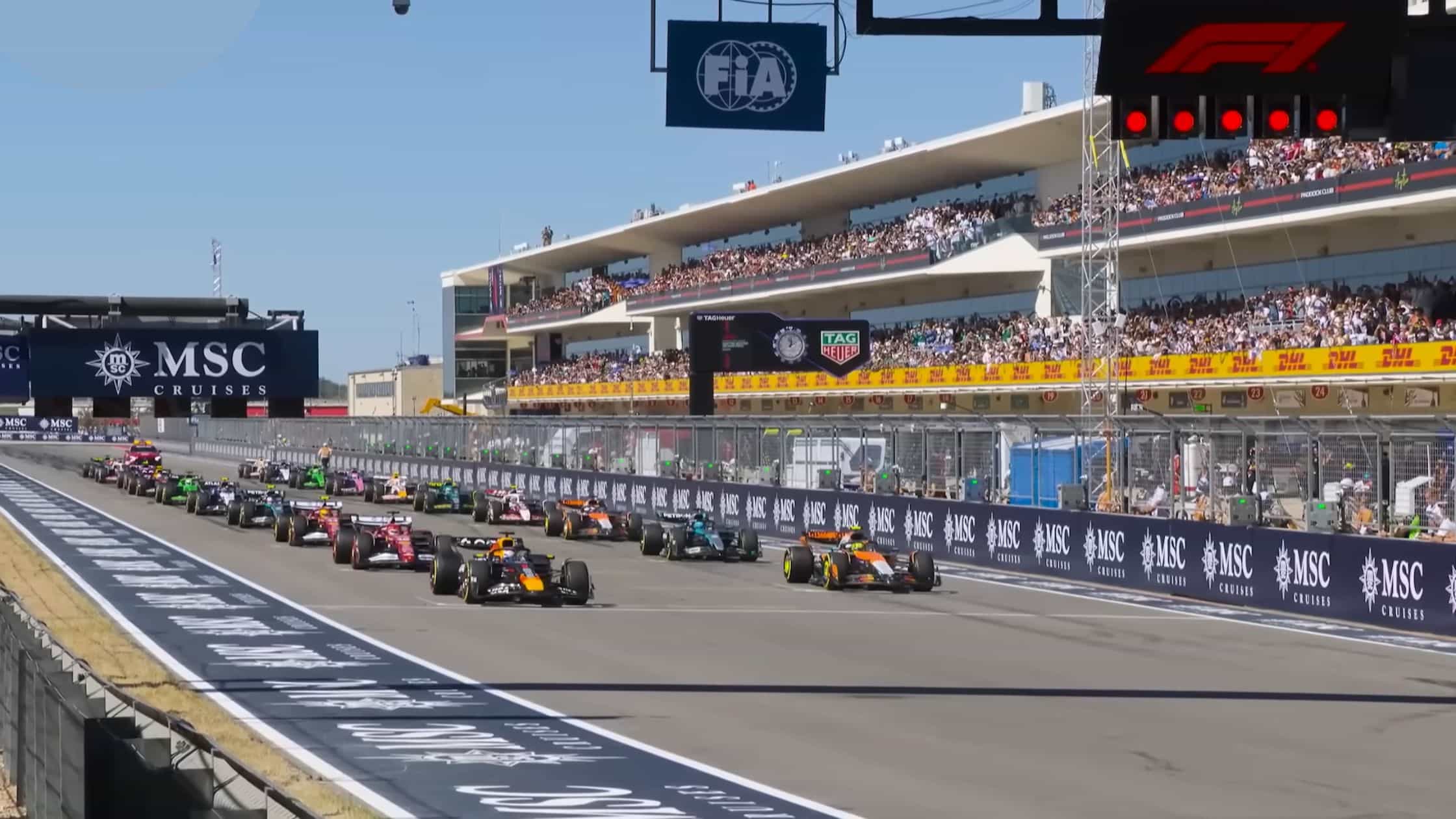
The Formula 1 United States Grand Prix 2026 is scheduled to take place in Austin, Texas, from October 23 to 25, 2026. Hosted at the Circuit of The Americas (COTA), the event will bring Formula 1 teams, drivers and motorsport fans together for a weekend of practice sessions, qualifying and the main Grand Prix.
The Austin race is part of the 2026 FIA Formula One World Championship and arrives during the late-season run through the Americas. With the Mexico City Grand Prix scheduled for the following weekend, the United States Grand Prix will be an important event for teams and drivers as the championship progresses towards its final rounds.
For spectators, the United States Grand Prix offers more than a Sunday race. The three-day programme combines high-speed motorsport with the atmosphere of a major international sporting event. Austin’s food, music and entertainment scene also gives visitors plenty to explore away from the circuit.
Formula 1 United States Grand Prix 2026: Event Details
The 2026 United States Grand Prix will take place at Circuit of The Americas, a purpose-built motorsport venue located outside central Austin. The main Formula 1 event runs from Friday, October 23, to Sunday, October 25, with additional activities potentially available during the wider race weekend.
The main Grand Prix is scheduled for Sunday, October 25, at 3 pm local time. The race is planned to cover 56 laps of the circuit, although fans should check the official timetable for any changes before travelling.
Event: Formula 1 United States Grand Prix 2026
Dates: October 23–25, 2026
Venue: Circuit of The Americas, Austin, Texas, USA
Race day: Sunday, October 25, 2026
Scheduled start: 3 pm local time
Circuit length: 5.513 kilometres
Race distance: 56 laps
For the latest confirmed details, visit the official Formula 1 United States Grand Prix website.
Why the 2026 United States Grand Prix Matters
The United States Grand Prix occupies an important place on the modern Formula 1 calendar. The Austin race gives the championship a major American stop while attracting an international audience interested in motorsport, racing technology and the drivers competing at the highest level.
The 2026 edition arrives during the final third of the season, when individual race results can have a significant influence on the championship standings. Drivers compete for points in the drivers’ championship, while teams are also fighting for position in the constructors’ championship.
Austin is also the opening stop in a run of races across the Americas. Following the United States Grand Prix, Formula 1 is scheduled to travel to Mexico City from October 30 to November 1, followed by São Paulo from November 6 to 8. The calendar then moves to Las Vegas later in November.
This sequence creates a demanding period for teams, drivers and travelling supporters. Teams must prepare their cars for different circuits while managing the logistical challenges of consecutive race weekends. Fans, meanwhile, have several opportunities to follow the championship across different countries and racing environments.
The importance of the Austin result will depend on the championship standings entering the weekend. Practice, qualifying and the Grand Prix itself will determine how the race affects the wider title contest.
Circuit of The Americas: The Home of Formula 1 in Austin
Circuit of The Americas, commonly known as COTA, has hosted Formula 1 in Austin since 2012. Its arrival established a dedicated home for the United States Grand Prix in Texas and created a regular fixture for American motorsport fans.
The circuit measures 5.513 kilometres and features a combination of high-speed corners, changes of direction, heavy braking zones and slower sections. This variety makes it a demanding venue for drivers and engineers because the car must perform well across different types of corners.
One of the track’s most recognisable features is the steep approach to Turn 1, which rises sharply from the start-finish area. The corner opens into a wide entry, giving drivers several possible racing lines while creating an interesting challenge during the opening lap.
Another defining feature is the sequence of fast corners that tests a driver’s precision and the car’s aerodynamic balance. Drivers must maintain a consistent rhythm through these sections because a small mistake can affect their positioning through the following corners.
Elsewhere, slower turns require careful braking, traction and acceleration. Teams must find a setup that balances speed through the faster sections with stability and grip in the tighter corners.
These contrasting demands make qualifying and race strategy important at COTA. Teams must consider tyre wear, braking performance, aerodynamic efficiency and the ability to follow another car closely enough to attempt an overtake.
For spectators, the circuit’s varied layout offers different perspectives on the competition. Some sections highlight the speed of modern Formula 1 machinery, while others showcase close braking battles and the precision required to negotiate tighter corners.
The venue also has a distinctive visual identity, including its prominent observation tower. Together with the surrounding Texas landscape, it provides a recognisable setting for the United States Grand Prix.
Formula 1 United States Grand Prix 2026 Schedule
The main Formula 1 programme runs from Friday, October 23, through Sunday, October 25. The standard Grand Prix format includes practice sessions on Friday, final practice and qualifying on Saturday, and the main race on Sunday.
Fans should consult the official event timetable before travelling because session times and supporting activities may be updated.
Friday, October 23: Practice Sessions
Friday gives teams their first full opportunity to assess their cars on the Grand Prix circuit. The opening practice sessions allow drivers to become familiar with the track conditions while engineers collect performance data.
Practice is about more than setting the fastest lap. Teams use the available running time to evaluate tyre behaviour, aerodynamic performance, braking stability and car balance. Engineers compare different setup options, while drivers assess how the car responds to the circuit’s changing demands.
Track temperature, wind and the amount of rubber on the racing surface can also influence performance. A team that gathers useful data early can make better-informed adjustments before qualifying.
Fans attending on Friday can watch the cars build up speed as drivers become more comfortable with the circuit. It is also an opportunity to compare the teams’ early performances before the weekend’s more competitive sessions begin.
Saturday, October 24: Final Practice and Qualifying
Saturday is an important day because it combines the final practice session with qualifying. The final practice gives teams one last opportunity to assess their setup before drivers begin their attempts to secure the best possible starting positions.
Teams may focus on short runs to evaluate one-lap pace or longer runs to understand tyre behaviour over several laps. Their programmes depend on the data collected during Friday’s sessions and the conditions at the circuit.
Qualifying determines the starting order for Sunday’s Grand Prix, subject to any penalties or subsequent changes. Drivers aim to produce their fastest possible lap while managing traffic, tyre preparation and the timing of their runs.
At a circuit such as COTA, a competitive qualifying lap requires precision across the entire track. A strong opening sector is valuable, but a mistake in a braking zone or a loss of momentum through a sequence of corners can erase an earlier advantage.
Qualifying provides an important indication of how the teams compare over a single lap. However, the starting grid does not automatically determine the final result. Long-run pace, tyre wear, pit-stop execution and incidents can all change the order during Sunday’s race.
Sunday, October 25: United States Grand Prix
Sunday is the main event of the weekend, with the 2026 United States Grand Prix scheduled to start at 3 pm local time. The race is planned to cover 56 laps, representing approximately 308.4 kilometres around Circuit of The Americas.
Before the start, spectators can follow the scheduled pre-race programme, subject to the latest official timetable. Fans attending in person should arrive with enough time to enter the venue, locate their seats and prepare for the race.
Once the lights go out, drivers must manage the opening laps while competing for position. Turn 1 is likely to attract particular attention because of its uphill approach and wide entry, although the racing action will depend on the starting grid and conditions on the day.
As the race develops, pit-stop strategy becomes an important part of the contest. Teams must decide when to bring their drivers in for fresh tyres, taking account of tyre degradation, traffic and the possibility of a safety car.
A well-timed stop can help a driver gain track position, while a poorly timed one may leave them behind rivals or in slower traffic. Strategy decisions can become especially important when several drivers are running close together.
The race distance also requires drivers to balance pace with tyre conservation. Pushing too hard at the wrong stage can compromise performance later in a stint, but leaving too much performance unused can create opportunities for competitors.
The final laps can bring additional pressure, especially if cars are close together or the leading positions remain undecided. Whether the event produces a close finish or a controlled run to the flag will only become clear once the race begins.
What Makes the Austin Grand Prix Special for Fans?
The United States Grand Prix has developed an identity that combines Formula 1 racing with Austin’s wider entertainment culture. The event attracts motorsport followers who want to see the cars in person, as well as visitors looking for a major sporting weekend.
COTA’s setting gives the event a different atmosphere from races staged in dense city centres. The purpose-built circuit allows spectators to experience different sections of the track, while the wider event programme can include additional entertainment and hospitality experiences.
For first-time attendees, the scale of a Grand Prix weekend is part of the appeal. Friday practice offers an introduction to the cars and teams, Saturday brings the pressure of qualifying, and Sunday delivers the main championship contest.
Watching Formula 1 in person also provides a different perspective from following a television broadcast. Spectators can experience the speed of the cars, observe braking points and cornering lines, and follow the action from their chosen viewing areas.
For experienced supporters, Austin offers the chance to watch a technically challenging circuit that rewards a combination of speed, precision and strategic decision-making. For casual visitors, the race provides an introduction to one of the world’s most prominent motorsport championships.
Austin, Texas: What Else Can Visitors Explore?
The race is the main attraction, but Austin provides additional reasons to plan a longer visit. As the capital of Texas, the city combines a lively music scene with restaurants, outdoor spaces and cultural attractions.
Austin is widely associated with live music, and visitors can explore venues around downtown and other neighbourhoods outside the circuit. The city’s food scene is another draw, particularly its Central Texas barbecue and Tex-Mex cuisine.
Outdoor attractions include Lady Bird Lake and the trails around its shoreline, which provide opportunities for walking and enjoying views of the city. The Texas State Capitol is another well-known landmark for visitors interested in local history and architecture.
Visitors should allow sufficient time to travel between the circuit and central Austin. COTA is outside the downtown area, and travel times can vary considerably during a major event. Planning transport in advance can help avoid unnecessary delays, particularly before the race and when large crowds leave the venue.
Accommodation is another consideration. Hotels in popular areas may experience high demand during an international sporting weekend, so visitors should compare locations, transport options and cancellation policies before making a booking.
Those arriving from overseas should also check the latest United States entry requirements, travel documentation and local transport arrangements before departure.
Tickets and Planning Your Visit
Fans planning to attend the 2026 Formula 1 United States Grand Prix should check the official event website for the latest ticket availability, seating information and visitor guidance. Ticket categories and prices can vary, and availability should be confirmed directly rather than assumed from older event listings.
The official Circuit of The Americas website provides a starting point for checking event arrangements and visitor information. The official Formula 1 race page is another source for the championship calendar and race details.
Visitors should review the latest venue guidance before leaving for the circuit. This includes information about permitted bags, prohibited items, parking, shuttle services, entry gates and restrictions that may apply to individual ticket types.
Arriving early can make the experience more manageable. It gives spectators time to enter the venue, locate their seats, explore available facilities and settle in before the scheduled sessions begin.
Weather is also worth considering when preparing for an outdoor sporting event in Texas. Comfortable footwear, suitable clothing, sun protection and drinking water, where permitted under the venue’s rules, can help visitors prepare for a long day at the circuit.
Fans travelling as a group may find it useful to agree on a meeting point in advance, particularly if mobile reception becomes unreliable in crowded areas. Checking the route back to accommodation before the event finishes can also help make departure easier.
Where to Watch the 2026 United States Grand Prix
Not every Formula 1 fan will be able to travel to Austin, but the Grand Prix can also be followed through official broadcast and streaming partners, depending on the viewer’s country.
Broadcast arrangements differ by territory, so fans should consult Formula 1’s official race information and the authorised broadcaster in their region for confirmed coverage details.
The race’s scheduled local start time of 3 pm in Austin corresponds to 8 pm UTC on October 25. Viewers in other time zones should check the conversion for their location, particularly because daylight-saving arrangements differ between countries.
For fans watching remotely, qualifying on Saturday can help establish the starting order, while practice sessions provide context about team performance and car setup. Following official timing, session results and championship standings can add detail to the race-day broadcast.
Formula 1’s official website publishes session schedules and results, making it a useful reference for people who cannot watch every session live. Fans should check the official timetable for changes before planning their viewing arrangements.
The Championship Picture Heading into Austin
The United States Grand Prix takes place at a point in the calendar when the championship is moving towards its closing rounds. With the Mexico City and São Paulo races scheduled soon afterwards, the Austin result will form part of a demanding sequence for teams and drivers.
The drivers’ championship is decided by points accumulated across the season, while the constructors’ championship reflects the results of each team’s two cars. Every race offers another opportunity to gain ground, defend a lead or recover from a difficult weekend.
The impact of the Austin race will depend on the standings entering October 23, along with the results of practice, qualifying and the Grand Prix itself. The competitive picture should become clearer as teams complete their preparations and qualifying runs.
COTA can reward a strong all-round package because the circuit combines fast corners with sections requiring heavy braking and reliable traction. Teams must find a setup that works across these different demands rather than concentrating on a single section of the lap.
Race strategy may prove equally important. Tyre performance, pit-stop timing, traffic and safety-car periods can affect the competitive order, making the Grand Prix a contest that extends beyond outright speed.
For followers of the wider championship, Austin is an important weekend to watch. The results will help shape the late-season battle before the calendar moves on to Mexico, Brazil and the remaining rounds.
What Fans Should Watch During the Weekend
One of the key storylines will be the comparison between qualifying performance and race pace. A driver starting near the front has an immediate advantage in track position, but maintaining it requires consistent pace, effective tyre management and well-executed pit stops.
The opening lap is another area to watch, particularly at Turn 1. The wide corner offers several possible racing lines, but drivers must judge their braking points carefully when cars arrive together. Any gains or losses in the opening corners can influence the strategic options available later.
Tyre management will also be worth following. Teams need to balance grip and durability over each stint, while drivers must respond to changing conditions and the performance of their rivals. The exact tyre strategies will depend on the compounds supplied for the event and the data gathered during practice.
The midfield battle may provide some of the weekend’s most closely contested racing. Drivers outside the leading positions still have championship points at stake, and the combination of overtaking opportunities and strategy can create changes throughout the field.
These are areas to monitor rather than predictions about the result. The competitive picture will become clearer as teams complete practice and qualifying, and the final outcome will only be known when the chequered flag falls.
The Formula 1 United States Grand Prix 2026, scheduled for October 23–25 at Circuit of The Americas in Austin, Texas, will bring another major championship weekend to the United States. The event features three days of Formula 1 activity, culminating in the 56-lap Grand Prix on Sunday, October 25, at a scheduled local start time of 3 pm. With its challenging circuit layout, high-speed corners, strategic demands and distinctive Austin setting, the race offers plenty for dedicated motorsport followers and newcomers alike. As the championship enters its late-season run through the Americas, fans will be watching closely to see how the teams and drivers perform in Austin before the action moves on to Mexico and Brazil. For the latest schedule, ticket information and confirmed event updates, visitors should consult the official Formula 1 and Circuit of The Americas websites before making their plans.


🏎️ Formula 1 is heading to Austin for the United States Grand Prix 2026, from October 23–25!
Who do you think will take the victory at Circuit of The Americas? Share your race predictions in the comments below! 🏁